


MALORY MLR-P01 Brass Low Voltage LED Path Light for Walkways & Garden

MALORY MLR-P01 Brass Low Voltage LED Path Light for Walkways & Garden - Bronze / With Bulb / 1-pack is backordered and will ship as soon as it is back in stock.
👉 Extra 6% Off Retail Prices Sitewide
💰 14% Off Orders Over $500
✅ Automatic Discounts at Checkout
🚚 Free Delivery in 3–5 Business Days
📍 CA & FL Orders Ship Within 24 Hours
↩️ 30-Day Hassle-Free Returns
🛡️ Lifetime Warranty on Die-Cast Brass Fixtures
Couldn't load pickup availability
Highlights
Highlights
Stable 12V Low Voltage Performance
Built for wired 12V landscape lighting systems, Malory MLR-P01 delivers consistent outdoor illumination night after night — without relying on sunlight, battery charging, or changing weather conditions.
A More Refined Look Than Plastic or Aluminum Fixtures
The brass body and bronze finish give your landscape a heavier, more premium appearance during the day and a cleaner, more polished lighting effect after dark.
One Fixture, Multiple Outdoor Scenes
Perfect for paths, walkways, driveways, patios, garden beds, and entry areas, this 12V brass path light improves nighttime visibility while helping create safer nighttime movement while adding warm, balanced illumination to your outdoor space.
Backed by Lifetime Warranty
Malory die-cast brass fixtures are backed by a lifetime warranty, giving you added confidence for long-term outdoor landscape lighting projects.
Description
Description
Malory MLR-P01 brass low voltage path light is designed for wired 12V landscape lighting systems, providing stable outdoor illumination without relying on sunlight or battery charging. Its solid brass body and bronze finish create a more premium daytime appearance than plastic or aluminum fixtures, while adding warm, balanced light after dark.
Ideal for pathways, walkways, driveways, patios, garden beds, and entry areas, this path light helps improve nighttime visibility, guide safer movement, and give your outdoor space a cleaner, more polished look. Backed by Malory's lifetime warranty on die-cast brass fixtures, it is built for long-term landscape lighting projects.
Specification
Specification
Fixture Material: Die-cast brass
Finish: Bronze
Input Voltage: 9–17V AC/DC
Water Resistance: IP65 rated
Lead Wire: 40" 18AWG premium copper wire
Lens: Frosted glass lens
Hat Size: 6.1"classic Hat &19"stem
Dimensions: 6.1"L x 6.1"W x 22.87"H
Weight: 3.14 lb
Replaceable Light Source: Yes
Compatible Bulb Type: G4 LED bulb
Included Lamp
Lamp Type: G4 LED
Wattage: 3W
Color Temperature: 2700K
Brightness: 180 lumens
Please Note: Transformer, low voltage direct burial cable, and wire connectors may be sold separately depending on the selected package.

MALORY MLR-P01 Brass Low Voltage LED Path Light for Walkways & ...

Why MLR-P01
-

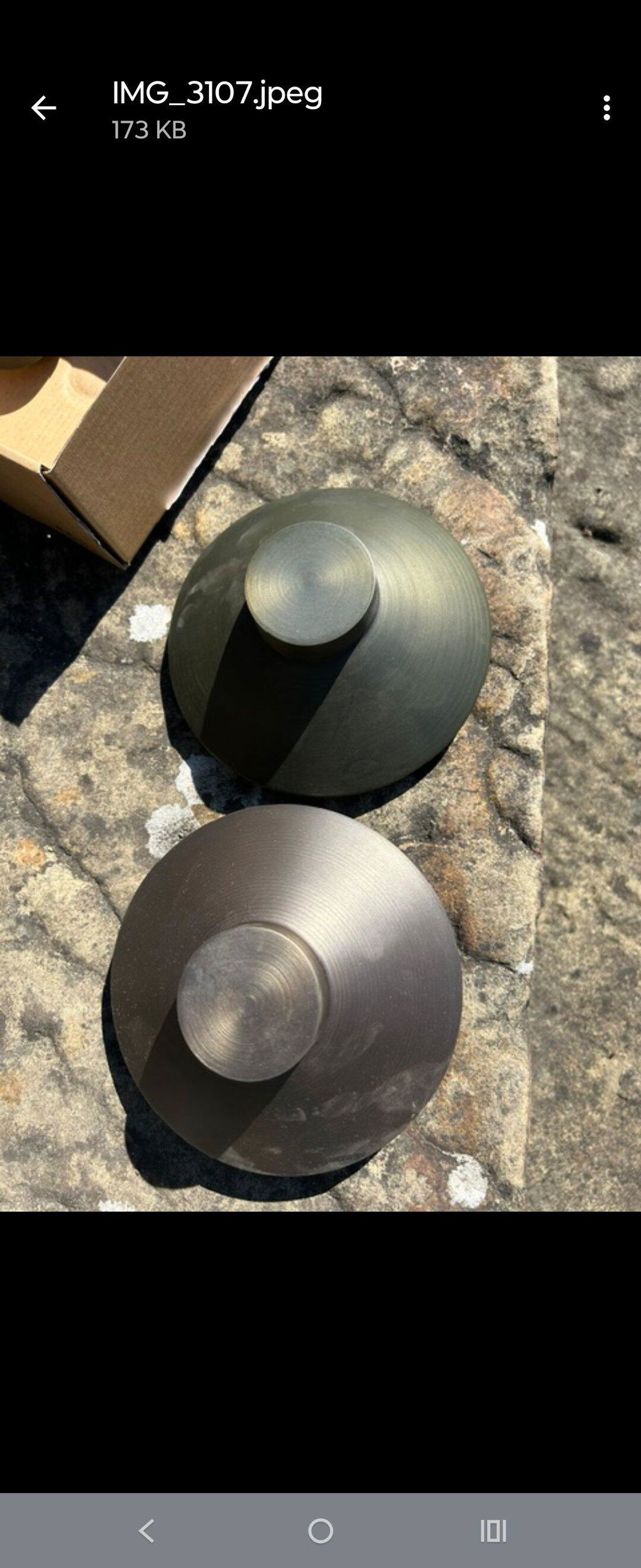
Fine, evenly distributed surface lines create a refined brass texture and give the P01 an elegant daytime presence.
-

Premium brass adds an elegant daytime look. A removable cap enables easy G4 bulb replacement, while dual sealing rings help block moisture.
-

Samsung or CREE LED chips deliver reliable warm illumination, while the IP65 design, efficient heat dissipation and 50,000-hour lifespan provide lasting outdoor performance.
-

Virgin copper delivers efficient, low-resistance power, while virgin PVC insulation provides better flexibility, durability, and resistance to cracking, moisture, and outdoor wear.


-
What included in the box
-
How long can I receive it
- We have CA/FL two warehouses for service
- We will arrange delivery nearby
- You will receive the goods in 3-5 business days
- Remote areas may take a little longer
-
How long is the warranty
- Brass Fixture: Lifetime
- LED Bulbs: 5 Years
- Stainless Steel Fixture: 3 Years
- Transformers: Lifetime
Product Comparison with Path Lights
| Facet |

MALORY MLR-P02 12V L-Shaped Integrated Brass LED Path Light,Low Voltage Landscape Lighting View details |

Malory MLR-P06 Adjustable Brass LED Path Light,Low Voltage Landscape Path Light (24" High, 180° Rotation) View details | |
|---|---|---|---|
| Price | |||
| Price |
From
$69.69
Unit price
/
Unavailable
|
From
$67.00
Unit price
/
Unavailable
|
From
$79.99
Unit price
/
Unavailable
|

Malory Low Voltage Brass Path Lights FAQ
01 How many path lights do I need?
The number depends on the shape of the walkway, fixture light spread, surrounding landscaping, and how bright you want the area to feel.
For many residential walkways, a starting point of around 8–12 ft between fixtures works well, but this should not be treated as a strict rule. Curves, planting beds, steps, entrances, and darker areas may need different spacing.
For the best result, position several fixtures temporarily and check the effect after dark before completing the installation.
02 Should path lights be installed on one side or both sides of a walkway?
Both layouts can work.
Alternating fixtures from one side to the other often creates a more natural appearance and helps avoid the overly symmetrical “airport runway” look.
For wider walkways, entrances, steps, or areas requiring more even illumination, fixtures on both sides may make sense.
03 How should path lights be spaced on a curved walkway?
Do not force the same spacing around every curve.
Place fixtures where they help reveal the direction of the path, especially around important bends or changes in direction.
On curved walkways, the visual relationship between each pool of light is usually more important than maintaining identical measurements.
04 How much area does one path light illuminate?
The actual light spread depends on several factors:
- fixture height
- shade size and shape
- lamp output
- surrounding plants
- installation position
- ground color and reflectivity
The same path light can appear much brighter above pale concrete than above dark mulch or dense planting.
This is why nighttime testing is more reliable than choosing spacing based only on a drawing.
05 Are 2W or 3W G4 LED lamps bright enough for path lighting?
For most residential path-lighting applications, yes.
Path lights are designed to spread light downward across the ground rather than project a concentrated beam over a long distance.
A lower-wattage G4 lamp can therefore provide comfortable illumination without making the walkway excessively bright.
More wattage is not always better. Excessive output can create glare and overly bright hot spots.
06 What color temperature works best for path lights?
Warm white is generally preferred for residential landscaping because it complements plants, stone, wood, brick, and other natural materials.
If you already have spotlights, well lights, or other landscape fixtures installed, using a similar color temperature will usually create a more consistent overall appearance.
07 Where should path lights be used?
Path lights work especially well around:
- walkways
- stepping-stone paths
- planting beds
- garden borders
- driveway edges
- entrances
- patio transitions
- darker areas between landscape zones
They are primarily designed to provide soft ground-level illumination rather than concentrated uplighting.
08 Can path lights be installed inside planting beds?
Yes.
Placing a path light slightly inside a planting bed can illuminate both the walkway and surrounding plants, creating a softer and more integrated landscape effect.
However, consider the mature size of nearby plants. A fixture that looks correctly positioned today may become hidden by foliage later.
09 How close should path lights be to plants?
Leave enough room for future plant growth.
Consider:
- mature plant width
- seasonal growth
- pruning frequency
- irrigation placement
- future mulch depth
Avoid positioning fixtures where plants are likely to completely block the shade or light output.
10 Can path lights be used along a driveway?
Yes, especially for defining driveway edges and nearby planting beds.
Install them far enough away from vehicle traffic that they are unlikely to be hit by tires, doors, lawn equipment, or other moving objects.
Path lights are not intended to be driven over.
11 How do I avoid making the landscape look over-lit?
Outdoor lighting usually looks better when some areas remain intentionally darker.
Rather than illuminating every section evenly, combine softer path lighting with stronger accent lighting around trees, walls, columns, or architectural features.
The contrast between light and shadow helps create depth.
12 Can I mix path lights with spotlights and well lights?
Yes.
A complete landscape lighting design often combines different fixture types.
For example:
- Path lights for walkways and planting beds
- Spotlights for trees, columns, walls, and architectural features
- Well lights for discreet uplighting near trees, walls, and landscape features
Using several fixture types usually creates more depth than relying on path lights alone.
13 Can the LED lamp be replaced?
Malory path lights that use a replaceable G4 LED lamp allow the lamp to be changed without replacing the entire fixture.
When purchasing a replacement lamp, confirm:
- G4 base
- operating voltage
- wattage
- physical dimensions
- available space inside the fixture
G4 lamps with the same base can still have different physical sizes.
14 Can Malory path lights work with an existing low-voltage landscape lighting system?
In many cases, yes.
Before adding new fixtures, check:
- transformer output voltage
- AC/DC compatibility
- remaining transformer capacity
- cable gauge
- existing cable condition
- total connected wattage
Compatible path lights can normally share the same transformer with spotlights and well lights.
15 Can all path lights be installed on one long cable run?
Yes, but it may not be the best layout for a larger system.
Several shorter cable runs from the transformer can provide more consistent voltage and make the system easier to troubleshoot or expand later.
16 What do I need to install a low-voltage path lighting system?
A typical system requires:
- low-voltage path lights
- compatible LED lamps if not included
- low-voltage transformer
- direct-burial landscape lighting cable
- outdoor-rated wire connectors
Transformer size and cable gauge should be selected based on the actual system load and cable-run distances.
17 Can sprinklers spray directly onto path lights?
Normal exposure to irrigation is expected, but continuous direct spray is best avoided where possible.
Repeated concentrated water exposure can accelerate mineral buildup, surface staining, and moisture accumulation around fixture openings.
18 Why did one path light stop working while the others still work?
A non-working light does not automatically mean the fixture has failed.
Check these items first:
- G4 LED lamp
- wire connector
- cable connection
- cable damage
- voltage reaching the fixture
- transformer output
In many low-voltage systems, individual light failures are caused by the lamp or electrical connection rather than the fixture body.
19 How deep should a path light be installed?
Use the ground stake to support the fixture.
The main fixture body should remain above the ground at its intended operating height rather than being buried deeply for stability.
In loose soil or mulch, improve the stability of the mounting area instead of burying more of the fixture body.
20 Where should path lights not be installed?
Avoid locations where the fixture is likely to be:
- driven over
- struck regularly by lawn equipment
- completely covered by mature plants
- submerged in standing water
- exposed continuously to strong sprinkler spray
- positioned where the lamp creates uncomfortable glare
Good fixture placement considers both nighttime lighting and everyday landscape maintenance.